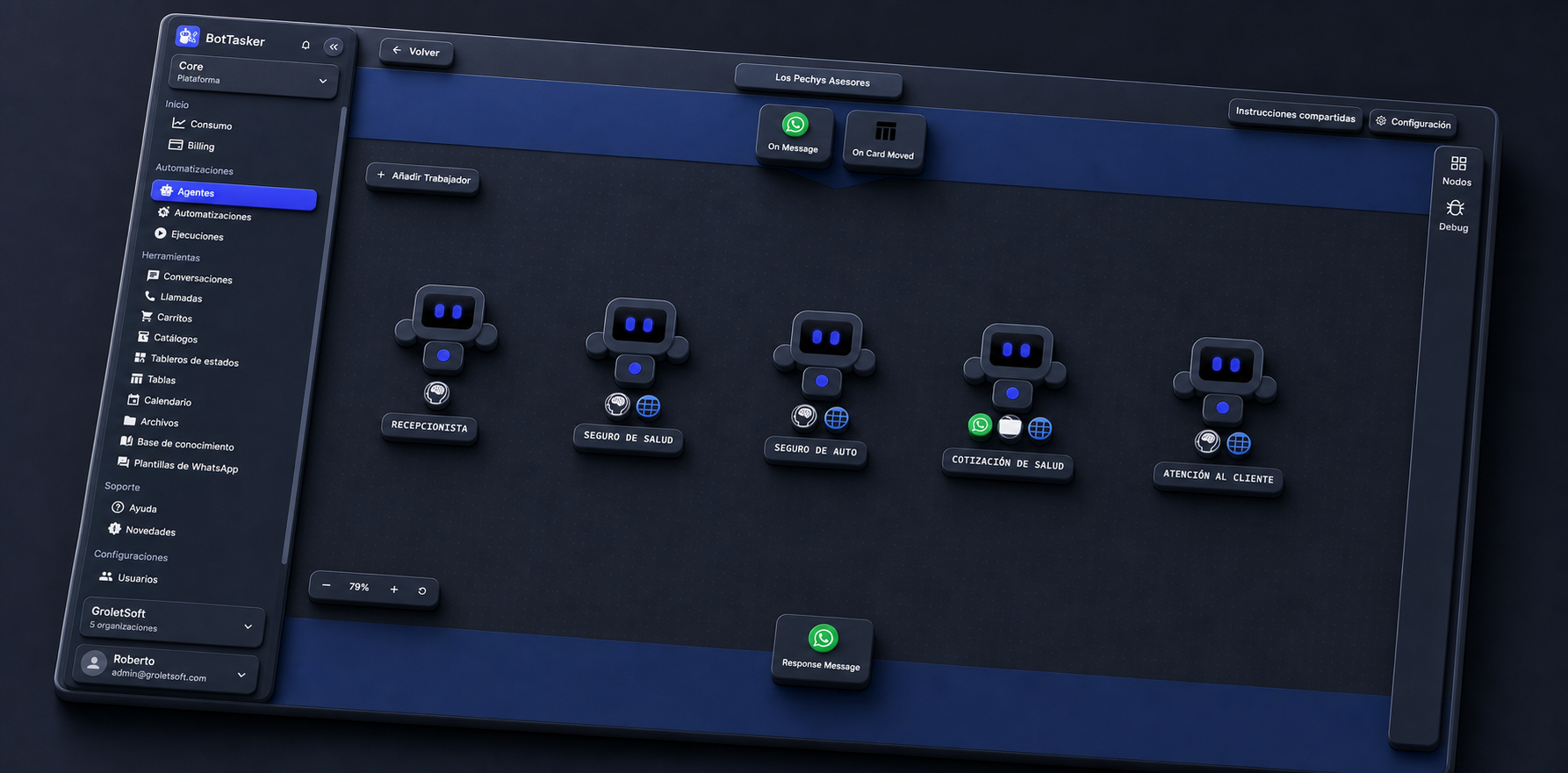
As we navigate through 2025, artificial intelligence has firmly established itself as a transformative force in business process automation. No longer just a competitive advantage, AI-powered automation has become essential for organizations looking to remain relevant and efficient in an increasingly digital marketplace. This guide explores how business leaders can strategically implement AI automation to transform operations, enhance customer experiences, and drive sustainable growth.
The Evolution of Business Process Automation
Business process automation has undergone a remarkable evolution over the past decade:
From Rule-Based Automation to Intelligent Automation
Traditional Automation (Pre-2020):
- Focused on repetitive, rule-based tasks
- Required explicit programming for every scenario
- Limited ability to handle exceptions or variations
- Primarily aimed at cost reduction
Current AI-Powered Automation (2025):
- Capable of handling complex, judgment-based processes
- Self-learning systems that improve over time
- Adapts to exceptions and process variations
- Drives both efficiency and value creation
Key Technologies Powering Modern Process Automation
1. Machine Learning and Predictive Analytics
- Identifies patterns and makes data-driven predictions
- Enables proactive decision-making and intervention
- Continuously improves accuracy through feedback loops
2. Natural Language Processing (NLP)
- Understands and generates human language
- Processes unstructured data from documents, emails, and conversations
- Enables sophisticated customer interactions and document processing
3. Computer Vision
- Interprets and processes visual information
- Automates tasks requiring visual inspection or document analysis
- Enhances quality control and compliance verification
4. Robotic Process Automation (RPA) with AI
- Combines traditional RPA with intelligent decision-making
- Handles end-to-end processes with minimal human intervention
- Adapts to changing process requirements and interfaces
Strategic Business Functions Transformed by AI Automation
1. Customer Experience and Engagement
AI automation has revolutionized how businesses interact with customers:
Intelligent Customer Service
- AI-powered chatbots and virtual assistants handle 70-80% of routine customer inquiries
- Sentiment analysis detects customer frustration and escalates to human agents when needed
- Personalized recommendations based on individual customer history and preferences
Case Study: Global telecommunications provider Telefónica implemented an AI customer service system that reduced average resolution time by 67% while improving customer satisfaction scores by 23%.
Omnichannel Experience Orchestration
- Seamless customer journeys across digital and physical touchpoints
- Real-time personalization based on customer context and history
- Proactive engagement based on predicted customer needs
Implementation Strategy: Start with automating high-volume, straightforward customer interactions while ensuring seamless escalation paths to human agents for complex issues.
2. Financial Operations and Planning
Finance departments are leveraging AI automation to transform from cost centers to strategic business partners:
Intelligent Accounts Payable/Receivable
- Automated invoice processing with 99%+ accuracy
- Exception handling for non-standard invoices and discrepancies
- Cash flow optimization through predictive payment timing
Financial Planning and Analysis
- AI-driven forecasting that incorporates market signals and internal data
- Scenario planning with multiple variables and constraints
- Continuous financial monitoring with automated alerts and insights
Case Study: Manufacturing conglomerate Siemens automated 65% of its accounts payable processes, reducing processing costs by 80% and capturing 99% of early payment discounts.
Implementation Strategy: Begin with document-intensive processes like invoice processing, then expand to more complex financial analysis and forecasting as confidence in the system grows.
3. Supply Chain and Operations
AI automation is creating resilient, adaptive supply chains:
Demand Forecasting and Inventory Optimization
- AI models that incorporate multiple demand signals, including social media trends and weather patterns
- Automated inventory adjustments based on predicted demand fluctuations
- Supplier risk assessment and proactive mitigation strategies
Smart Manufacturing and Quality Control
- Real-time production adjustments based on quality parameters
- Predictive maintenance to prevent equipment failures
- Computer vision for automated quality inspection
Case Study: Consumer goods company Procter & Gamble implemented AI-driven demand forecasting that reduced forecast errors by 35% and inventory holdings by 20% while improving product availability.
Implementation Strategy: Focus initial efforts on demand forecasting and inventory management where even small improvements yield significant ROI, then expand to more complex operational areas.
4. Human Resources and Talent Management
HR functions are being transformed from administrative to strategic through AI automation:
Recruitment and Onboarding
- AI-powered candidate screening and matching
- Automated interview scheduling and follow-up
- Personalized onboarding experiences for new hires
Employee Experience and Development
- Predictive analytics for identifying flight risks
- Personalized learning recommendations based on career goals and skill gaps
- Automated performance feedback and coaching suggestions
Case Study: Technology company IBM implemented an AI talent management system that reduced time-to-hire by 50% and improved new hire retention by 30% through better candidate matching and personalized onboarding.
Implementation Strategy: Start with automating repetitive HR processes like applicant screening and document verification, then progress to more sophisticated talent analytics as data quality improves.
Implementation Framework for AI-Powered Process Automation
Successful implementation of AI automation requires a structured approach:
1. Strategic Assessment and Prioritization
Begin with a comprehensive evaluation of your organization’s processes:
Process Inventory and Analysis
- Document current processes and their business impact
- Identify pain points, inefficiencies, and strategic importance
- Assess data availability and quality for each process
Opportunity Prioritization Matrix
- Business impact (cost savings, revenue growth, customer experience)
- Implementation complexity and resource requirements
- Strategic alignment with organizational goals
- Quick win potential for building momentum
Key Consideration: Focus initial efforts on processes that combine high business impact with reasonable implementation complexity to demonstrate value quickly.
2. Technology Selection and Architecture
Choose the right technologies and design a scalable architecture:
Technology Evaluation Criteria
- Alignment with specific process requirements
- Integration capabilities with existing systems
- Scalability and flexibility for future expansion
- Total cost of ownership, including implementation and maintenance
Build vs. Buy Decisions
- Core vs. context capabilities
- Availability of pre-built solutions for your industry
- Internal technical capabilities and resources
- Long-term strategic importance of the capability
Key Consideration: Develop a modular architecture that allows you to start with targeted solutions while building toward an integrated automation ecosystem.
3. Change Management and Skill Development
Address the human side of AI automation:
Stakeholder Engagement
- Early involvement of process owners and end users
- Clear communication about objectives and expected benefits
- Addressing concerns about job displacement and role changes
Workforce Transformation
- Skill gap analysis and development programs
- Creating new roles focused on AI oversight and exception handling
- Establishing centers of excellence for automation expertise
Key Consideration: Position AI automation as augmenting human capabilities rather than replacing them, focusing on how it eliminates tedious tasks and enables more strategic work.
4. Governance and Scaling
Establish frameworks for responsible deployment and expansion:
Ethical AI Guidelines
- Transparency in AI decision-making
- Bias detection and mitigation strategies
- Human oversight for critical decisions
Continuous Improvement Framework
- Performance metrics and success criteria
- Regular review and refinement cycles
- Mechanisms for capturing and implementing user feedback
Key Consideration: Develop clear governance structures from the outset to ensure responsible scaling of AI automation across the organization.
Overcoming Common Implementation Challenges
1. Data Quality and Accessibility
Challenge: AI systems require high-quality, accessible data to function effectively.
Solution:
- Conduct a data quality assessment before implementation
- Implement data governance and cleansing procedures
- Start with processes where data quality is already sufficient
- Build data improvement into the automation roadmap
2. Integration with Legacy Systems
Challenge: Many organizations struggle to connect AI automation with existing systems.
Solution:
- Use API layers and middleware to bridge legacy systems
- Implement robotic process automation as an interim solution
- Consider phased modernization of critical legacy systems
- Design for interoperability from the beginning
3. Organizational Resistance
Challenge: Employees may resist automation due to fear of job loss or process disruption.
Solution:
- Involve employees in the automation design process
- Clearly communicate how roles will evolve, not disappear
- Showcase early successes and benefits to build support
- Provide comprehensive training and transition support
4. Measuring ROI
Challenge: Traditional ROI metrics may not capture the full value of AI automation.
Solution:
- Develop a balanced scorecard of metrics (efficiency, quality, strategic value)
- Establish clear baselines before implementation
- Include both quantitative and qualitative measures
- Track long-term impacts on customer satisfaction and employee experience
The Future of AI-Powered Process Automation
As we look beyond 2025, several trends will shape the evolution of business process automation:
1. Autonomous Business Operations
We’re moving toward systems that can not only execute processes but also optimize and redesign them:
- Self-optimizing workflows that adjust based on outcomes
- Automated process discovery and improvement
- Dynamic resource allocation based on business priorities
2. Cognitive Automation
The next frontier combines multiple AI capabilities to handle increasingly complex processes:
- Multi-modal AI that processes text, voice, and visual information simultaneously
- Contextual understanding across multiple processes and systems
- Ethical decision-making frameworks for sensitive processes
3. Collaborative Intelligence
The most effective implementations will focus on human-AI collaboration:
- AI systems that understand when to involve human judgment
- Interfaces designed for seamless handoffs between AI and humans
- Continuous learning from human decisions and feedback
4. Democratized Automation
AI automation tools are becoming accessible to business users without technical expertise:
- No-code/low-code platforms for business-led automation
- AI assistants that can generate automation workflows from descriptions
- Self-service analytics and reporting capabilities
Conclusion: Strategic Imperatives for Business Leaders
As AI-powered automation continues to transform business operations, leaders should focus on these strategic imperatives:
-
Develop an enterprise-wide automation strategy aligned with your business objectives rather than pursuing disconnected point solutions
-
Invest in data infrastructure and governance as the foundation for effective AI automation
-
Focus on augmentation rather than replacement by redesigning roles to leverage uniquely human capabilities
-
Build organizational capabilities through training, hiring, and partnerships to support your automation journey
-
Establish clear ethical guidelines for responsible AI use that align with your organizational values
By approaching AI-powered process automation strategically, business leaders can transform their operations, enhance customer experiences, and create sustainable competitive advantage in an increasingly digital business landscape.
BotTasker’s comprehensive AI automation platform helps organizations implement intelligent process automation with pre-built industry solutions, intuitive workflow designers, and enterprise-grade security. Contact us today to learn how we can help accelerate your automation journey.