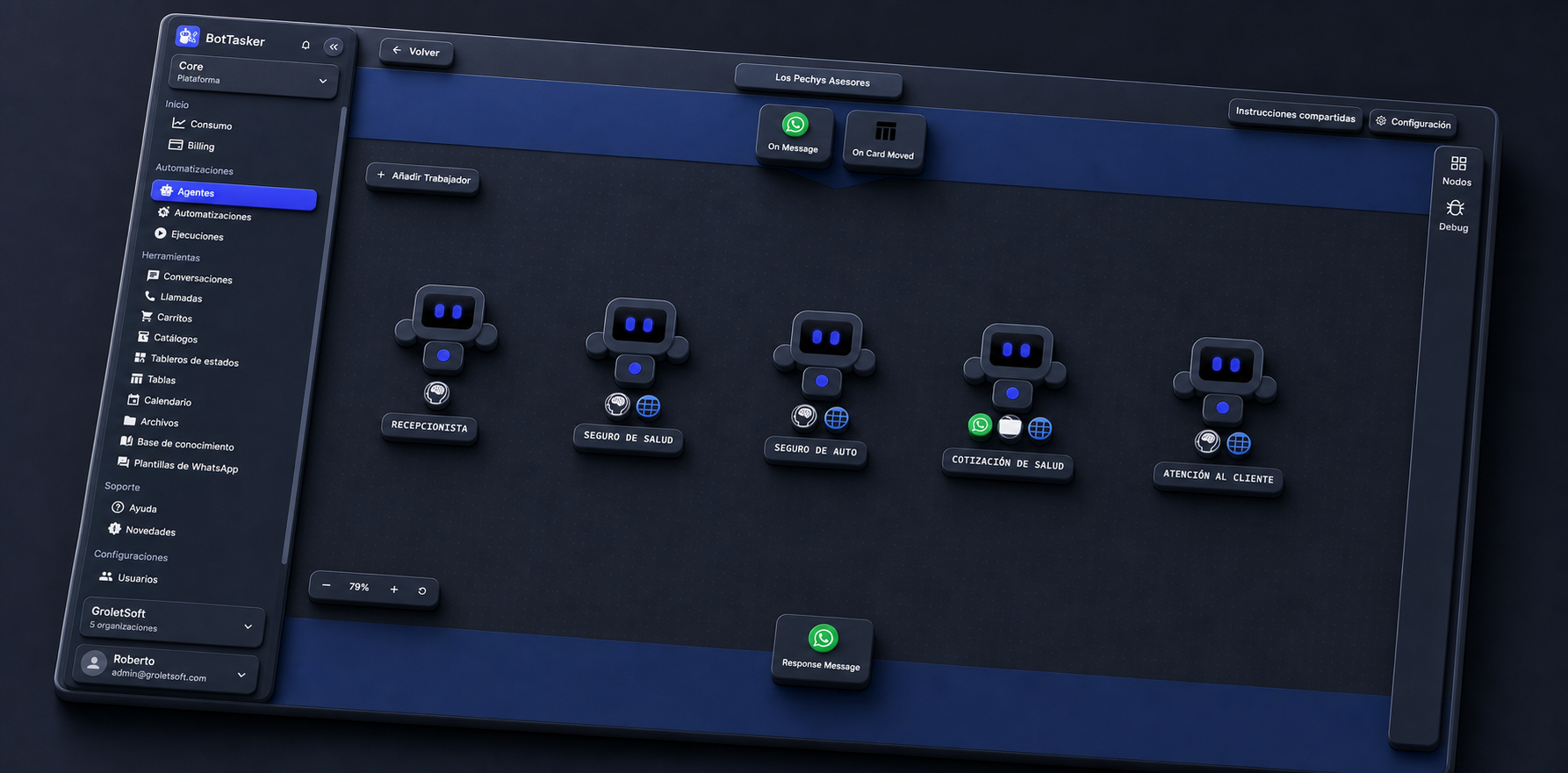
In today’s rapidly evolving business landscape, companies that can efficiently scale their operations have a significant competitive advantage. Workflow automation has emerged as a critical tool for businesses looking to grow without proportionally increasing overhead costs or sacrificing quality. In this comprehensive guide, we’ll explore how workflow automation can transform your business operations in 2025 and beyond.
Understanding Modern Workflow Automation
Workflow automation has evolved significantly from simple task automation to comprehensive business process management. Today’s automation platforms integrate artificial intelligence, machine learning, and advanced analytics to create intelligent workflows that can adapt and improve over time.
The Evolution of Business Automation
First Wave (1990s-2000s): Basic task automation focused on repetitive, rule-based activities Second Wave (2010s): Process automation with some decision-making capabilities Third Wave (2020s): Intelligent automation incorporating AI, predictive analytics, and adaptive learning
Modern workflow automation platforms like BotTasker represent this third wave, offering capabilities that go far beyond simple “if-this-then-that” logic to deliver truly transformative business results.
5 Key Areas Where Workflow Automation Drives Business Growth
1. Customer Relationship Management
Effective customer relationship management is essential for business growth, but manually tracking interactions across multiple channels can be overwhelming. Automation transforms CRM processes in several ways:
Lead Qualification and Routing
- Automatically score and qualify leads based on behavior and demographics
- Route prospects to the appropriate sales representative based on territory, industry, or product interest
- Trigger personalized follow-up sequences based on specific actions
Customer Onboarding
- Create standardized yet personalized onboarding experiences
- Automatically provision accounts and resources
- Send timely educational content based on customer progress
Retention and Upsell
- Monitor product usage patterns to identify at-risk accounts
- Trigger intervention workflows when engagement metrics decline
- Identify expansion opportunities based on usage patterns and business growth
Case Study: Financial services firm Morgan Stanley implemented an automated client onboarding system that reduced account setup time from 5 days to less than 24 hours while improving compliance documentation by 35%.
2. Financial Operations
Financial processes are often both time-sensitive and error-prone when handled manually. Automation can transform finance operations through:
Invoice Processing
- Automatically capture invoice data from emails and documents
- Match invoices to purchase orders and receiving documents
- Route for approvals based on amount thresholds and department hierarchies
Expense Management
- Extract data from receipts using OCR technology
- Validate expenses against company policies
- Streamline approval workflows and reimbursement processing
Financial Reporting
- Automatically gather data from multiple systems
- Generate standardized reports on predefined schedules
- Distribute reports to stakeholders with appropriate access controls
Case Study: Manufacturing company Siemens implemented automated accounts payable processes that reduced processing costs by 80% and accelerated payment cycles by 60%, significantly improving vendor relationships.
3. Human Resources
HR departments often struggle with administrative burdens that limit their strategic contributions. Workflow automation can transform HR operations:
Recruitment and Onboarding
- Screen applications based on predefined criteria
- Schedule interviews and send automated reminders
- Generate and route employment documents for signature
- Coordinate equipment provisioning and access permissions
Employee Time and Attendance
- Automatically track work hours across multiple locations
- Calculate overtime and PTO accruals
- Flag compliance issues for manager review
Performance Management
- Schedule and track review cycles
- Collect feedback from multiple stakeholders
- Generate performance reports and analytics
Case Study: Technology company IBM implemented an AI-powered recruitment automation system that reduced time-to-hire by 50% while increasing candidate quality scores by 35%.
4. Operations and Supply Chain
Operational efficiency directly impacts a company’s ability to scale. Automation creates resilient, adaptable operations:
Inventory Management
- Automatically reorder products based on inventory levels and sales forecasts
- Adjust safety stock levels based on seasonal patterns
- Generate alerts for potential stockouts or overstock situations
Order Processing
- Validate and process orders from multiple channels
- Route orders to appropriate fulfillment locations
- Trigger shipping and delivery tracking workflows
Vendor Management
- Automate vendor performance tracking
- Schedule regular compliance and certification reviews
- Manage contract renewal timelines and negotiations
Case Study: Retailer Walmart implemented automated inventory management that reduced out-of-stock incidents by 30% while decreasing inventory carrying costs by 15%.
5. Marketing Operations
Marketing teams juggling multiple campaigns across various channels benefit significantly from automation:
Campaign Management
- Schedule and coordinate multi-channel campaigns
- Automatically adjust campaign parameters based on performance
- Trigger follow-up actions based on engagement metrics
Content Distribution
- Schedule content publication across multiple platforms
- Personalize content delivery based on user preferences
- Recycle high-performing content at optimal intervals
Performance Analytics
- Automatically aggregate data from multiple marketing platforms
- Generate standardized performance reports
- Identify trends and opportunities for optimization
Case Study: E-commerce company Shopify implemented marketing automation that increased email engagement by 45% and improved conversion rates by 25% while reducing campaign management time by 60%.
Implementation Strategy: The 5-Step Approach to Successful Automation
Implementing workflow automation requires a strategic approach to ensure maximum ROI and minimal disruption:
1. Process Assessment and Prioritization
Begin by mapping your current processes and identifying automation candidates based on:
- Volume and frequency of the process
- Standardization and rule-based nature
- Current error rates and quality issues
- Strategic importance to the business
- Potential ROI from automation
Pro Tip: Start with processes that have high volume but low complexity to achieve quick wins that build momentum.
2. Technology Selection
Choose automation tools that align with your specific needs:
- Integration capabilities with your existing systems
- Scalability to grow with your business
- User-friendly interfaces for non-technical staff
- Security and compliance features
- Analytics and reporting capabilities
Pro Tip: Prioritize platforms that offer visual workflow builders and pre-built templates to accelerate implementation.
3. Phased Implementation
Roll out automation in manageable phases:
- Start with a pilot project in a controlled environment
- Gather feedback and refine the workflow
- Document best practices and lessons learned
- Gradually expand to additional processes and departments
Pro Tip: Create a cross-functional implementation team that includes both technical experts and process owners.
4. Change Management
Address the human side of automation:
- Communicate the benefits and purpose clearly
- Provide comprehensive training and support
- Recognize and address concerns about job displacement
- Celebrate successes and share positive outcomes
Pro Tip: Position automation as a tool that eliminates tedious tasks and allows employees to focus on higher-value work.
5. Continuous Optimization
Treat automation as an ongoing journey:
- Regularly review automated workflows for improvement opportunities
- Monitor key performance indicators
- Incorporate user feedback
- Stay current with new automation capabilities and technologies
Pro Tip: Schedule quarterly automation reviews to identify processes that could benefit from additional automation or refinement.
Measuring the Impact of Workflow Automation
To justify investment in automation and guide optimization efforts, track these key metrics:
Efficiency Metrics
- Process cycle time
- Labor hours per transaction
- Error rates and rework requirements
- Processing costs per transaction
Business Impact Metrics
- Customer satisfaction scores
- Employee satisfaction and retention
- Revenue impact (faster sales cycles, improved upsell)
- Compliance improvement
Strategic Value Metrics
- Business scalability (growth without proportional cost increase)
- Innovation capacity (time redirected to strategic initiatives)
- Market responsiveness (ability to adapt to changing conditions)
- Competitive differentiation
Common Challenges and How to Overcome Them
Integration Complexity
Challenge: Connecting disparate systems with varying data formats and APIs. Solution: Utilize integration platforms (iPaaS) with pre-built connectors or choose automation tools with robust integration capabilities.
Process Variability
Challenge: Automating processes with numerous exceptions and edge cases. Solution: Start by automating the “happy path” that covers 80% of cases, then gradually incorporate exception handling.
Change Resistance
Challenge: Employee concerns about job security or comfort with existing processes. Solution: Involve employees in the automation design process and emphasize how automation will improve their work experience.
Technical Debt
Challenge: Legacy systems that are difficult to integrate with modern automation platforms. Solution: Consider API layers or middleware that can bridge legacy systems with automation tools.
The Future of Workflow Automation
As we look beyond 2025, several trends will shape the evolution of workflow automation:
Hyperautomation The convergence of multiple technologies (RPA, AI, process mining) to automate increasingly complex processes end-to-end.
Autonomous Business Operations Self-optimizing workflows that can adapt to changing conditions without human intervention.
Collaborative Intelligence Seamless collaboration between human workers and digital assistants, with each handling the tasks they do best.
Democratized Automation Low-code/no-code platforms that enable business users to create and modify their own automated workflows.
Conclusion
Workflow automation has evolved from a nice-to-have efficiency tool to a strategic necessity for businesses looking to scale in 2025 and beyond. By systematically identifying automation opportunities and implementing them with a focus on both technology and people, organizations can create resilient, adaptable operations that support sustainable growth.
BotTasker’s comprehensive workflow automation platform makes it easy to start your automation journey with pre-built templates, intuitive visual workflow designers, and seamless integrations with your existing systems. Contact us today to learn how we can help transform your business operations through intelligent automation.